
Action, Character, and Competence
Army Leadership: Be, Know, Do
The Army’s comprehensive leadership framework is known as “Be, Know, Do,” emphasizing the core principles of character, competence, and action. Just like in the Army, these fundamentals apply to leaders at all levels, direct, organizational, and strategic.
This framework serves as a guide for developing effective leadership qualities that foster a positive organizational climate and promote individual and collective success.
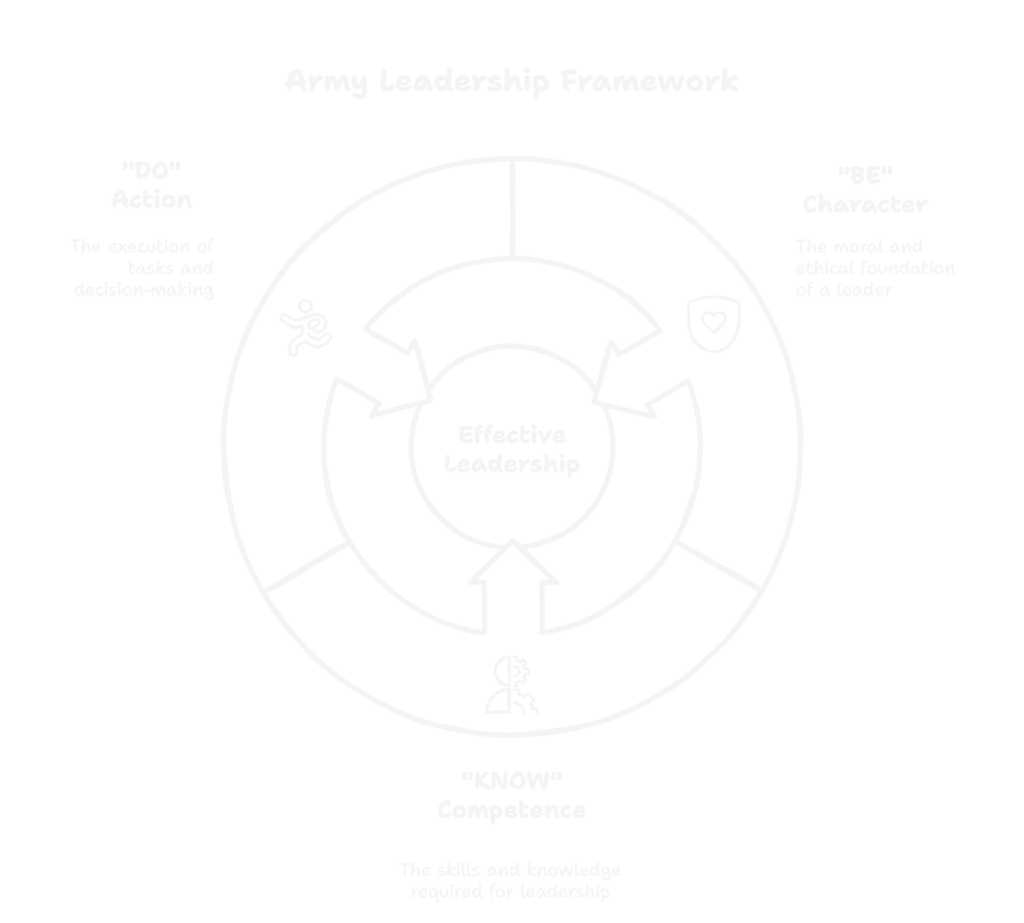
Leadership starts with the character of the leader. The “Be” involves:
- Embracing positive core values, like the Army values, such as loyalty, duty, respect, selfless service, honor, integrity, and personal courage. Values are personal, so it is important that you develop your own guiding principles, or values to guide you on your journey.
- Developing leader attributes such as mental, physical, emotional, interpersonal, conceptual, technical and tactical abilities.
- Demonstrating character through behavior and teaching Army values to subordinates through example.

Competence, the “Know” of the framework, is based on developing skills in four domains:
- Interpersonal skills, such as communicating, team building, supervising, and counseling.
- Conceptual skills, such as critical thinking, problem-solving, and anticipating requirements.
- Technical skills, which include knowledge of military operations and management.
- Tactical skills which include applying military doctrine.
The “Do” of the framework, involves taking action, which is divided into three categories:
- Influencing which involves motivating others to achieve goals.
- Operating which involves executing plans and managing resources.
- Improving, which focuses on developing individuals and organizations for long-term success.

FM 22-100 offers an overview of different leadership styles, noting that effective leaders adjust their style to match the situation and the people they are leading:
- Directing: Leader-centered, with detailed instructions and close supervision.
- Participating: Involving subordinates in planning and decision-making.
- Delegating: Giving subordinates authority to solve problems and make decisions independently.
- Transformational: Inspiring subordinates to rise above their self-interests, focusing on individual growth.
- Transactional: Motivating through rewards and punishments, with a focus on rules and regulations.
The Army emphasizes that leaders at all levels should strive to create a positive organizational climate where individuals are challenged, motivated, and treated with dignity and respect. The leader’s behavior is the most important factor in creating this climate. Leaders should also be prepared to adapt their style and approach as they take on positions of increasing responsibility.
In summary, “Be, Know, Do” is a dynamic, values-based leadership approach that focuses on developing leaders of character and competence who can act to achieve excellence. This approach requires adaptability, self-awareness, and a commitment to developing both oneself and others.
Reference: Department of the Army. (1999). Army leadership: Be, know, do (Field Manual No. 22-100). Headquarters, Department of the Army.